Open Umbilical Hernia Repair Step-by-Step Walkthrough | Dr. Todd Harris
A surgical walkthrough of an umbilical hernia repair using Ventralex ST mesh, including the recreation of the patient’s innie belly button.
Specialist Overview: Traditional & Tissue-Based Repair
Open hernia surgery involves a single, precise incision made directly over the hernia defect. This “anterior” approach allows for direct visualization of the anatomy and is the preferred method for specialized “No-Mesh” tissue repairs. Unlike laparoscopic methods, open surgery allows the surgeon to perform a multi-layer reconstruction of the abdominal wall, which is particularly beneficial for primary inguinal and umbilical repairs.
- No-Mesh (Shouldice): A meticulous technique that uses the patient’s own natural tissue to close the defect, eliminating the use of foreign materials.
- Lichtenstein Repair: The “gold standard” for open mesh repair, using a flat mesh to bridge the defect in a tension-free manner.
- Direct Visualization: Open surgery provides the surgeon with tactile feedback and the ability to address complex nerve anatomy directly to prevent chronic pain.
Mastery in Open Reconstruction
Dr. Todd Harris is one of a select few surgeons nationwide specialized in the Shouldice tissue-to-tissue repair. As an ACHQC Verified Surgeon of Quality and an 11-year Physician of Excellence, he ensures that every open repair is performed to the highest technical standard. Our open surgery protocols are integrated with the NOPIOIDS trial (NCT05929937) and our published research on evidence-based surgical outcomes (PMID: 39724506).
Open Hernia Surgery – Inguinal
Inguinal hernias are caused by a hole in the muscle of the groin. This hole can either be lateral to the blood vessels (indirect inguinal hernia), or towards the middle from the blood vessels (direct inguinal hernia). Regardless, in open surgery, the muscle layers over the weakened muscle are opened. The hole (or holes) in the muscle are found.
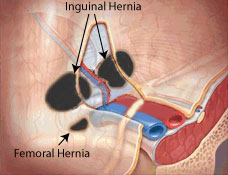
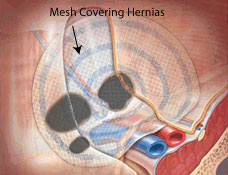
The defect (or hole) in the muscle is often closed with sutures. This provides one layer of protection against the hernia coming back. If a no mesh is being performed, a patient’s natural tissues are used to reinforce the hernia repair. If a mesh repair is being performed, a small mesh is used to reinforce the area of the hernia defect and the muscle around the hole. The mesh reinforces the weakened muscle layer again providing help to prevent a recurrent hernia. Patients can be a candidate for a no mesh hernia repair if they fit acceptable criteria.
Surgical Mastery: The Open Inguinal Repair Protocol
In this clinical walkthrough, Dr. Todd Harris demonstrates the high-volume technique used for an open inguinal hernia repair. Our protocol emphasizes the early identification and preservation of the ilioinguinal nerve, which is critical for preventing chronic post-operative discomfort. By utilizing a Bard Soft Mesh—a thin, flexible biomaterial—we reinforce the floor of the inguinal canal while maintaining a tension-free repair. This approach ensures that the repair is structurally sound while allowing for a more comfortable and natural recovery.
Is a Non-Mesh Repair Right for You?
While modern mesh is safe for most, we recognize that many patients prefer a tissue-based approach. In this video, Dr. Todd Harris discusses our expertise in the Shouldice technique and other non-mesh options. Choosing a tissue repair requires a careful evaluation of hernia size and patient BMI to ensure a low risk of recurrence. Our goal is to provide a customized surgical plan that respects your preferences while delivering a permanent, tension-free result.
Bilateral Hernia Repair: Mastering the Simultaneous Open Approach
Bilateral hernias require a high level of surgical symmetry and precision. In this video, Dr. Todd Harris provides a clinical walkthrough of an open repair performed on both the right and left sides during a single procedure. We utilize the Bard Soft Mesh ‘keyhole’ technique, which protects the spermatic cord while creating a tension-free reinforcement for the inguinal canal. Our specialized approach ensures that both sides heal synchronously, allowing for a balanced and stable recovery.
Complex Case: Repairing the Large Inguinal Scrotal Hernia
Large scrotal hernias, particularly those involving the colon (sliding hernias), present unique challenges that require high-volume expertise. In this clinical video, Dr. Todd Harris demonstrates the reduction of a massive left-sided hernia. Because the internal ring was dilated to nearly 8cm, the procedure required a multi-step internal ring reconstruction before the final reinforcement with Bard Soft Mesh. This meticulous approach ensures that even when natural tissues are severely stretched, we can restore the integrity of the abdominal wall and provide a permanent solution.
Open Hernia Surgery – Umbilical and Ventral
Umbilical and ventral hernia repairs are almost always best done open. During open surgery, a small incision is made in the crease under the belly button or over the hernia bulge. The belly button or the overlying tissues and fat are exposed and the hole in the muscle is found. Depending on the size of the muscular defect and the healthiness of the surrounding muscles, either the hole is closed primarily with sutures performing a no mesh natural tissue repair or a small a mesh is placed through the hole.
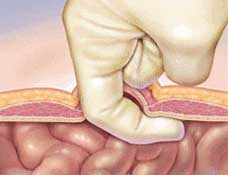
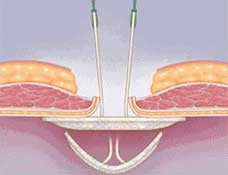
If a mesh is used, it is then sutured to the surrounding healthy muscle in several locations and usually the muscles are closed over the hernia mesh. Once the mesh is securely fastened to the muscle, the belly button is replaced down to the muscle or fat and the skin is sutured closed.
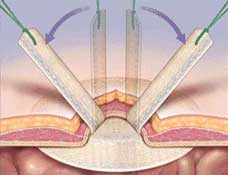
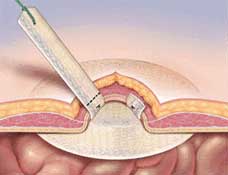
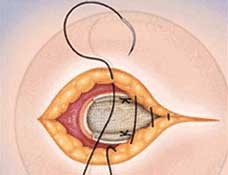
Surgical Walkthrough: The Open Umbilical Repair Process
Many patients are curious about the mechanics of an umbilical hernia repair. In this video, Dr. Todd Harris provides a clinical walkthrough of an open repair. We utilize a Ventralex ST mesh patch, which is uniquely designed to sit underneath the muscle, providing a tension-free reinforcement that is nearly imperceptible to the patient. Beyond the internal repair, we take significant care in the umbilicoplasty phase, suturing the belly button back to the muscle closure to ensure a natural ‘Innie’ appearance.
Ventral & Umbilical Repair: The Tissue-Only Alternative
While mesh is the standard of care for larger hernias, many patients with smaller defects are excellent candidates for a non-mesh umbilical repair. In this video, Dr. Todd Harris outlines the clinical parameters we use to ensure a durable result without synthetic materials. By focusing on defects under 2cm and patients with a healthy BMI, we can bring the natural muscle tissue back together using high-strength sutures, providing a permanent repair that respects the patient’s preference to avoid foreign bodies.
Tension Vs. Tension-Free Hernia Repair
The term ‘tension’ or ‘tension-free’ is commonly used when describing a particular hernia surgery. Hernias are caused by a weakening of the abdominal muscles which over time develops into a true hole. For patients who desire a no mesh repair, the muscles surrounding the hernia defect are sewn back together to close the hernia. This pulling together of the muscles creates tension which his why primary (no mesh) repairs are considered ‘tension repairs’.
In many patients, whether due to the size of the hernia or the patient, it’s not advisable for a surgeon to simply pull the muscles back together. In those cases, most hernia specialists today utilize a mesh to help strengthen the muscles and the hernia repair. When using a mesh, the muscles themselves are often not sewn together limiting the tension on the tissues providing a ‘tension free’ repair. Instead, a mesh is placed over or under the hole in the muscle to prevent anything from pushing through the abdominal wall.
Choosing a Non-Mesh Repair: Patient Autonomy and Safety
While modern surgical mesh is statistically the most durable option, Dr. Todd Harris understands that for patients with autoimmune diseases or foreign body sensitivities, a tissue-only repair may be the preferred choice. By weighing personal health priorities against recurrence rates, we help you decide on a specialized plan that minimizes inflammatory risk. Dr. Todd Harris discusses the clinical benefits of tissue-only (non-mesh) hernia repair for patients with autoimmune concerns or foreign body sensitivities.
Dr. Harris continues to advance open surgery outcomes as the Principal Investigator for the NOPIOIDS trial (NCT05929937), focusing on narcotic-free recovery for both open and laparoscopic repairs.
Mesh Safety: Separating Fact from Fear
We understand that headlines about hernia mesh can be alarming. In this video, Dr. Todd Harris explains why the data supports the use of modern, lightweight mesh for the majority of patients. By using the ‘tension-free’ repair method—think of patching a hole in old jeans rather than pulling the fabric tight—we can drastically reduce the risk of recurrence. Our practice uses only the most advanced, biocompatible materials to ensure your repair is strong, flexible, and permanent.
Our Approach
Our office specializes in the surgical repair for all hernia types. We provide patients with the full spectrum of treatment options from open no mesh hernia repairs to advanced minimally invasive laparoscopic techniques. Dr. Harris and our team perform over 500 hernia repairs each year making us the busiest center on the West Coast, and one of the top 3 in the country. Our evidence-based approach is supported by Dr. Harris’s published research on postoperative pain management in hernia repair (PMID: 39724506).
For over 10 years we have partnered with the Abdominal Core Health Quality Collaborative (ACHQC) to track the outcome of every surgery we perform. Year over year, our nationally leading outcome data shows a lower chance of hernia recurrence and a lower risk of developing chronic pain – data which we actively publish on our website. Our commitment to cutting edge hernia care, the full spectrum of surgical options, as well as research and transparency in our data, helps ensure you will have the best outcome after your hernia surgery. For these reasons we have been selected as a Verified Surgeon of Quality by the ACHQC.


 Dr. Harris, Thank you for saving Justin’s life. You saw how much he suffered. When no pediatric surg/gi would touch him, you saved him!


