

About Hernia Symptoms
Hernia symptoms vary dramatically from one patient to the next. While some of the hernia symptoms listed below may be
present in one patient, another patient may experience no symptoms.
Some patients' hernia symptoms may develop slowly over time
while other patients may develop severe hernia symptoms acutely.
Many patients ask, "How do I know if I have a hernia?", "What are the symptoms of a hernia?"
and "What does a hernia feel like?". We hope that below you
are able to learn more about the symptoms of hernias.

Hernia Symptoms-Acute Pain
One of the most common symptoms of a hernia is the rapid onset of pain at the hernia site. Pain which develops quickly is often caused by extreme pressure on the muscles, the peritoneum, and the nerves in the area of the hernia (see below). As fat and internal organs press through the small hole in the muscle (which is the hernia), the surrounding muscles and nerves are under pressure. This pressure is what causes the acute pain in many hernia patients. This is also why when the hernia is 'reduced', or pushed back in, the pain is often relieved since the pressure on the muscles and nerves in the area is reduced.
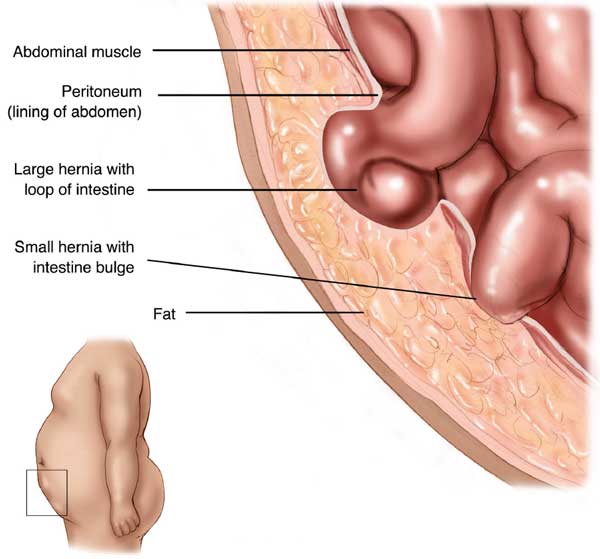
Pain with hernias is also caused by the pressure on the fat and internal organs as they are squeezed through the small hernia hole in the muscle. When the 'herniated' fat or internal organ becomes swollen inside the hernia, it can become very painful and difficult to 'reduce' back inside.
Hernia Symptoms-Bulges under the skin
When internal fat or internal organs press through a hole in the muscle, a hernia develops. This is one of the most common symptoms of a hernia. These internal organs and fat cause the skin over the hernia to 'bulge' out. When patients reduce the hernia back inside, often that bulge regresses and disappears. However, when the hernia contents push back through the hole in the muscle, the bulge returns.


As long as the bulge is 'reducible', it means that the contents of the hernia are able to freely travel back and forth through the hernia defect. Once the bulge is not able to be pushed back inside, the hernia is considered 'incarcerated'. Meaning the internal organs are no longer able to be pushed back to it's original location. Although a bulge is common, some patients don't have a bulge as a hernia symptom.
Hernia Symptoms-Chronic Pain
Some hernias develop slowly over time and do not develop acute pain described above. As the hernia slowly enlarges, it can often cause tension on the muscles and the nerves around the hole. This slow, chronic process, often results in aching, burning, throbbing, and generalized discomfort in the area of the hernia. This pain is different from the acute pain some patients experience in that it isn't as sharp and intense; rather it's more of a dull ache which can interfere with everyday activities.
Hernia Symptoms-Referred Pain
When the nerves within the groin get stretched from either an acute hernia, or a chronic hernia, the entire length of the nerve becomes irritated. This irritation in the nerve can cause pain to radiate, or be relayed to areas below or above the actual hernia. In the case of a groin hernia, this can mean pain in the lower abdomen, in the upper thigh, or into the scrotum and testes in men.
Even when the hernia is reduced inside, the irritation of the nerves can lead to long standing discomfort in these areas. Even though the hernia is not in the exact area of the pain, it can be the cause of aches, pressure, burning, and other symptoms.
Hernia Symptoms-Nausea and Vomiting, Hernia Strangulation
In a rare symptom of a hernia, a piece of the large or small intestine can become trapped inside a hernia. This piece of intestine can become blocked and the blood supply cut off. This can result in a backup of food inside the intestine (bowel obstruction) and ultimately permanent injury to the intestine (strangulated bowel).
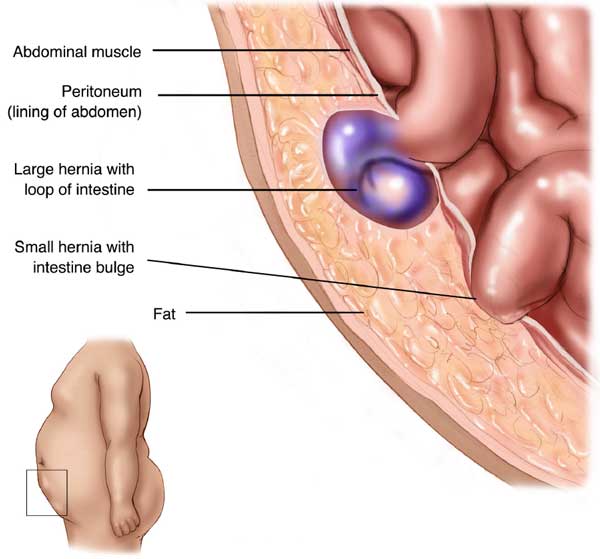
Occasionally these symptoms can be mild and intermittent. This often happens when only a small portion of the intestine is trapped inside the hernia, or when the intestine is able to pop into, and out of, the hernia on it's own. This causes intestinal blockages on and off, leading to nausea and vomiting which comes and goes almost at will. Hernia patients with these symptoms should be seen by a hernia specialist as soon as possible.
Hernia Symptoms-Constipation
Just like patients who develop nausea and vomiting, on rare occasions when a piece of intestine is trapped inside a hernia, the passage of food through that area can be very slow. This can lead to chronic constipation. Although constipation is usually causes by many other diseases, a patient with a hernia and constipation together should be seen by a hernia specialist as soon as possible.
Risk Factors for Developing a Hernia
Although most people that develop hernias have no specific 'risk factor', those with the following may be at an increased risk of developing a hernia:
- Being a male. Men are more likely to develop an inguinal hernia. Women can also get groin hernias, but more infrequently than males.
- Family history. The risk of developing a hernia increases if you have a close relative, such as a parent or sibling, with a hernia.
- Chronic cough. A chronic cough, such as occurs from smoking or COPD, increases your risk of hernias.
- Chronic constipation. This leads to frequent straining during bowel movements which increases stress on the abdominal wall and increases the chances of developing a hernia.
- Being overweight. Being moderately to severely overweight puts extra stress and pressure on your abdominal muscles. Over time this can weaken the muscles and cause a hernia.
- Pregnancy. This can both weaken the abdominal muscles and cause increased pressure inside your abdomen.
- Certain occupations. Having a job that requires heavy physical labor increases your risk of developing a hernia due to the repeated stress and pressure on the abdominal muscles.
- History of hernias. If you've had a previous hernia, it's more likely that you can develop another. This is usually associated with inguinal or groin hernias on the opposite side.
Below is a short video discussing hernia symptoms
In this short video, Dr. Harris discusses the symptoms commonly associated with hernias.
Listen to our past patients discuss their experiences with this topic:
Important points to consider when choosing a hernia surgeon:
- The newest, advanced lightweight mesh can reduce not only recurrence rates for hernias, but also reduces the chance of postoperative mesh pain to almost zero.
- Being treated at a specialized hernia center with an in-house accredited ASC provides the highest quality care before, during, and after your hernia surgery.
- Patients should be seen by a surgeon who can offer all forms of hernia surgery, including open lightweight mesh techniques, as well as advanced laparoscopic techniques. This ensures the surgeon can offer the best technique tailored for each patient.
- Costs for uninsured patients are approximately $1500 for the surgeon fees, and $2000 for the surgery center fees (including OR time, materials, and recovery) for a total of approximately $3500.
- Some laparoscopic patients experience less pain post-operatively and may be able to return to normal activities sooner (when compared to traditional hernia repair). Laparoscopic hernia surgery can result in better patient experiences for some patients.
- Nuestra oficina habla español. Haga clic aquí para español.